
Answer Short Question
Answer Short Question (ASQ) is a Speaking task where you hear a short audio question and reply with a one-word or short-phrase answer. On this page: an overview of the task, top strategies for the 3-second countdown and 10-second response, sample answers and common mistakes to practise with your trainer, the most repeated 2026 questions, and a guided task worksheet.
Overview
Question audio length:
3–9 seconds
Time to record your answer:
10 seconds
Number of these tasks:
5–6
Answer Short Question is part of the Speaking & Writing section. The screen only shows an audio player — there is no image and no text. After the question audio ends, you have 3 seconds before the recorder opens, then 10 seconds to give a one-word or short-phrase answer. There is no beep.
- You will hear the question once — there is no transcript on the exam screen.
- After the audio ends, a 3-second countdown runs in the recorder box.
- The recorder opens silently (no beep) — start speaking immediately.
- Marks are awarded for a short, accurate answer. Extra words do NOT add points.
How Answer Short Question contributes to your score
Task
Answer Short Question
scoring
Listening
Overall
Your voice → analysed by AI → contributes 5% to Listening and 3% to Overall.
Watch — Answer Short Question walkthrough
Official PTE School walkthrough — how to answer ASQ.
How the test screen works
The screen below is annotated with green markers (1–5) placed right next to the element they describe. Each marker is explained on hover — they cover the timer, instructions, question audio, recorder status box and the Next button.
You will hear a question. Please give a simple and short answer. Often just one or a few words is enough.2Read the task instructions carefully — answer in just one or a few words.
Audio Status 3The audio status box plays the question once. Then there is a 3-second pause before the recorder opens. There is NO beep.
Audio Recorder
Recording in 3
Hover the green markers to see what each part of the screen does.
What this task tests
Skill assessed
Listening
Score weight
up to5points
The AI scorer checks
Comprehension
Understanding detailed information
Vocabulary
Understanding academic vocabulary
Comprehension
Inferring the meaning of unfamiliar words
Top Strategies for Success in Answer Short Question
A good way to expand your vocabulary is by using diagrams. Use these to build up your knowledge of word forms. A thesaurus and dictionary can help you to add more words.
Start with a common word, (e.g. pollution), and put this at the top of your diagram. You can then show the different parts of speech of this word, along with example sentences.
You can also create diagrams to extend your vocabulary on a topic. Here is an example, on the topic of the environment.
Practice tips
- Learn academic vocabulary as it really helps with these tasks! Research shows that an excellent way to improve your vocabulary is to do lots of reading on a range of different topics.
- While reading, Note down new words you find in a vocabulary notebook. Record other information about the word, too (e.g. whether it's a noun, verb or adjective, countable or uncountable, etc). Include example sentences in your notebook.
- Focus on learning the right vocabulary. Don't spend too much time on technical words that you might never use. Focus on broadening your vocabulary in general across a lot of topics and learning words that might be used frequently in an academic context.
- Record the pronunciation of new words. Use a dictionary that has a recording of the words, and make sure you know where the stress is placed. This may change between noun, verb and adjective forms (e.g. extrovert, extroversion, extroverted).
- Don't worry about your general knowledge. These questions test your English, not your knowledge. They can be answered just by using the general knowledge that most people have.
- Find question lists. Practise answering your own questions or by using the questions in the online Question Bank.
Quick Tips For Better Score
Quick Tips for a Better Score
Do not pause for too long when you answer the question
You hear a short question and then the recording status box will change to recording.
Start your answer as soon as this happens. If you wait for more than three seconds, the recording will stop and the item status will change to 'completed', which means that you have lost your chance to give your answer.
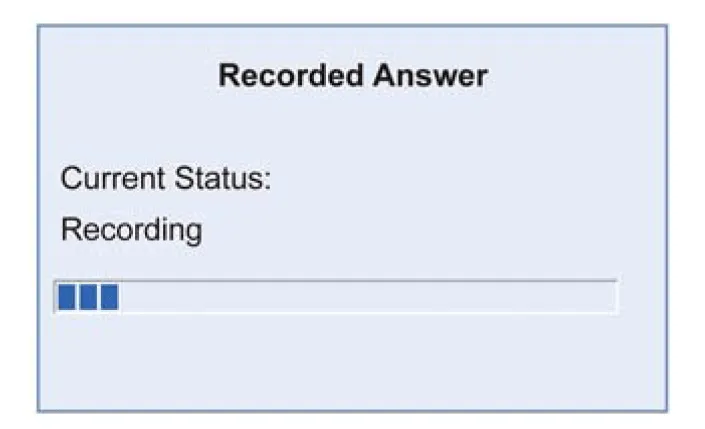
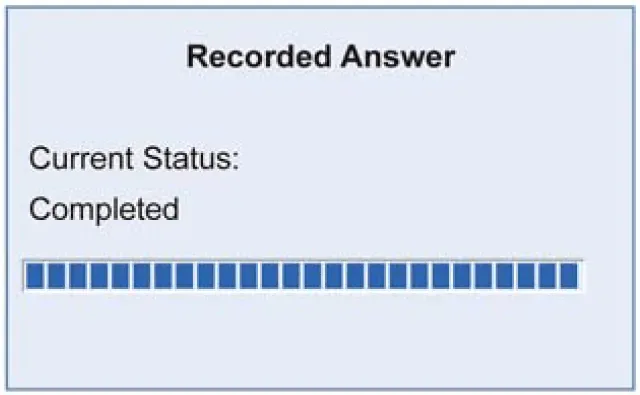
When you have started talking, don't stop for more than a second or two until you have finished. If you stop for three seconds whilst speaking, the recording status will change to 'completed' even if you haven't finished, and you won't be able to continue answering.
If the status changes to 'completed', you have to click 'Next' to move on to the next item. This also applies to speaking item types Read aloud, Repeat Sentence, Describe Image and Re-tell Lecture.
Do not try to give a long answer
The instructions for this item type tell you how to answer the question:

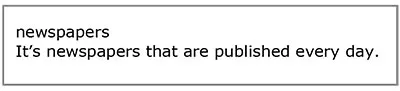
There is no point in saying more than you need to say. Marks are awarded for a short, accurate answer. There are no extra marks for additional words.
For example, for this question: 'What type of periodical is published on a daily basis?', both these answers would score the same marks:
How this question is scored
Answer Short Question contributes to your Listening score. It is scored on Word Choice (ASQ): a single correct word/short phrase earns full marks; an incorrect or no answer earns zero. Open the card below for the full band descriptors.
Answer Short Question is graded only on whether you say the appropriate word. Pronunciation and fluency don’t count for this task type. Say the answer clearly, in one short phrase.
- Answer in 1–3 words.
- Stay literal — they want the obvious answer.
- Long sentences that bury the answer.
- Saying the wrong synonym (sea ≠ ocean in some prompts).
- Appropriate word choice in response.
Coach tip · Listen for the question word (what/who/where/which) — that controls the answer.
- ◾No partial credit — answers are scored as either correct or incorrect.
- ◾This question type only affects your Listening score.
Quick tips — Do this, not that
- Tip 01
You start speaking the moment the recorder opens.
You don't wait for a beep — there isn't one.
- Tip 02
You answer with one word or a very short phrase.
You don't give a full sentence or repeat the question.
- Tip 03
You match the part of speech the question is asking for.
You don't say a verb when the question wants a noun.
- Tip 04
If you realise you were wrong, you correct yourself quickly.
You don't sit silent — three seconds of silence ends the recording.
- Tip 05
If you don't know, you guess.
You don't skip — there is no penalty for a wrong answer.
Practice now with your trainer
Try ASQ — Practice with Trainer
Real exam timing — question audio plays once, then 3-second countdown, then 10 seconds to speak. Record your answer and compare with your trainer's feedback.
You will hear a question. Please give a simple and short answer. Often just one or a few words is enough.
Audio Status
Audio Recorder
Recording in 3
Common Mistakes in Answer Short Question
Common Mistakes in Answer Short Question
Watch the most common mistakes students make in Answer Short Question — and how to avoid them.
Most Repeated Questions in 2026
Most Repeated Answer Short Questions — 2026
Practise with the six most frequently repeated ASQ items from recent exam reports. Press play, listen once, and speak your one-word or short-phrase answer.
- 1
Show transcriptHide transcript
Listen to question 1 and answer with one word or a short phrase.
✅ Answer | ASQShowHide
Seasons
- 2
Show transcriptHide transcript
Listen to question 2 and answer with one word or a short phrase.
✅ Answer | ASQShowHide
Body language / sign language
- 3
Show transcriptHide transcript
Listen to question 3 and answer with one word or a short phrase.
✅ Answer | ASQShowHide
Melt
- 4
Show transcriptHide transcript
Listen to question 4 and answer with one word or a short phrase.
✅ Answer | ASQShowHide
Budget
- 5
Show transcriptHide transcript
Listen to question 5 and answer with one word or a short phrase.
✅ Answer | ASQShowHide
Sunscreen
- 6
Show transcriptHide transcript
Listen to question 6 and answer with one word or a short phrase.
✅ Answer | ASQShowHide
Graffiti
Answer Short Question — Task Worksheet
How to use this worksheet
In this worksheet, you are going to look at strategies for preparing for and practising the Answer Short Question task. Work through each section, then check your answers with your trainer.
Answer Short Question — Task Worksheet
Eight sections covering confidence-building, equipment, key-word listening and vocabulary spider-grams.
11. True or False — statements about the Answer Short Question task
Step 1 of 10
+
1. True or False — statements about the Answer Short Question task
Step 1 of 10
It is important to build up your confidence before attempting this task. Read the statements about the Answer Short Question task. Tick the ones you believe are TRUE.
22. Equipment and set-up — choose the correct option (a, b or c)
Step 2 of 10
+
2. Equipment and set-up — choose the correct option (a, b or c)
Step 2 of 10
You need to be familiar with the equipment and the set-up of the task, so we can use practice videos. Choose the correct option a, b or c for each question.
💡 The goal of this task
The goal of the task is to answer a question in one or a few words. Your response must be an appropriate answer, so it is important to listen for the question word, for example, How, How many, What or Where. The question word tells you what type of answer you need to give. For example, if you hear ‘Where ___?’ the answer is likely to be a place (e.g. Toronto, Paris, etc.).
1. 1. What will you see on the screen? a. instructions, audio status box and image b. recording status box and audio status box c. instructions, audio status box and recording status box
2. 2. You should… a. change one portion of the microphone for each question. b. keep the microphone in the proper position for the management. c. bring the microphone very close to your mouth in the exam room to be ready during the task.
3. 3. If you raise your voice / make an error, you… a. use it again / exit b. can start again c. will accept zero
32.1 Match the question word(s) with TWO answers from the box
Step 3 of 10
+
2.1 Match the question word(s) with TWO answers from the box
Step 3 of 10
Use the word bank below. Each question word may take two answers — write both on the lines provided.
1. Where?
2. Where?
3. Where?
4. How many?
5. How often?
45.2 Listen and write down the question word(s) you hear
Step 4 of 10
+
5.2 Listen and write down the question word(s) you hear
Step 4 of 10
Listen to the recording. The first time you listen, write down the question word(s) you hear (e.g. What, Where, How many).
🎧 Model audio
1. Question 1 — question word(s):
2. Question 2 — question word(s):
3. Question 3 — question word(s):
4. Question 4 — question word(s):
55.3 Listen again and answer the questions as quickly as you can
Step 5 of 10
+
5.3 Listen again and answer the questions as quickly as you can
Step 5 of 10
Listen again and try to answer the questions as quickly as you can. Then expand the answer key to compare.
🎧 Model audio
💡 Listen for key words
In this task, it is important to listen for key words that will give you clues to the answer.
Q1 — Transcript & answerShowHide
Transcript: How many legs does a spider have? Answer: A spider has eight legs.
Q2 — Transcript & answerShowHide
Transcript: What do we call organs in our chest that we use to breathe? Answer: We call them lungs. The lungs are the organs in our chest that we use to breathe.
Q3 — Transcript & answerShowHide
Transcript: How often does an annual plant have flowers? Answer: An annual plant flowers once a year, completing its entire life cycle — from germination to seed — within a single year.
Q4 — Transcript & answerShowHide
Transcript: Where do you find kangaroos in their natural habitat? Answer: Kangaroos are found in their natural habitat in Australia, primarily across grasslands, savannas, and open woodlands.
1. Your answer to question 1:
2. Your answer to question 2:
3. Your answer to question 3:
4. Your answer to question 4:
66.1 Read the questions and underline the key words. Then answer them.
Step 6 of 10
+
6.1 Read the questions and underline the key words. Then answer them.
Step 6 of 10
Read each question and underline the key words (the question word + the noun/verb that carries the meaning). Then write a short, accurate answer. Check your answers in the answer key.
1. 1. Which medical professional do you visit if you have a problem with your eyes? (ophthalmologist / optician)
2. 2. What is a long, thin, man-made stretch of water which boats use to travel along?
3. 3. What two very large sea mammals which breathe out through a hole in the top of the head?
4. 4. What is a general word used or commonly used to describe the city?
5. 5. What is a building with scientific equipment for using experiments?
76.2 Complete the questions with the missing key words
Step 7 of 10
+
6.2 Complete the questions with the missing key words
Step 7 of 10
Read the questions and answers. Complete each question with the missing key word(s) that match the answer below.
1. 1. Q. How many ____________ does a square have? A. four
2. 2. Q. What do we call the ____________ in our house that we use to ____________? A. basin
3. 3. Q. What ____________ would you use to chop ____________? A. an axe
87.1 Vocabulary spider-gram — 'the environment'
Step 8 of 10
+
7.1 Vocabulary spider-gram — 'the environment'
Step 8 of 10
Building your vocabulary is a great way to prepare for the Answer Short Question task. Look at the spider-gram about the subject area of 'the environment'. Use an English–English dictionary to check the meaning of any words you don't know.
1. Word 1 (write a definition):
2. Word 2 (write a definition):
3. Word 3 (write a definition):
4. Word 4 (write a definition):
97.2 Complete the spider-grams: Jobs · Medicine & the human body · Places
Step 9 of 10
+
7.2 Complete the spider-grams: Jobs · Medicine & the human body · Places
Step 9 of 10
Look at the spider-grams. Complete them with the words connected to each subject area. Use a thesaurus and a search engine.
1. Jobs — list 6 words:
2. Medicine & the human body — list 6 words:
3. Places — list 6 words:
10Final practice — Answer the questions under exam conditions
Step 10 of 10
+
Final practice — Answer the questions under exam conditions
Step 10 of 10
Practise the Answer Short Question task. Listen to the recording and answer the two questions under exam conditions — one word or a short phrase, no pauses. Then expand the answer key to compare.
🎧 Model audio
Q1 — Transcript & answerShowHide
Transcript: What type of periodical is published on a daily basis? Answer: A newspaper is the type of periodical that is published on a daily basis.
Q2 — Transcript & answerShowHide
Transcript: What is the demarcation point that divides the Earth into a Northern Hemisphere and a Southern Hemisphere? Answer: The Equator is the demarcation point that divides the Earth into a Northern Hemisphere and a Southern Hemisphere.
1. Your answer to question 1:
2. Your answer to question 2: