Stay focused
Be ready to listen carefully to the short sentence you are going to hear. It will be short (3–9 seconds) and you need to repeat every word you hear.

Repeat Sentence (RS) is a Speaking task that tests how accurately you can reconstruct a sentence you hear, using your knowledge of grammar and vocabulary. On this page: an overview of the task, top strategies for listening and chunking, sample answers and common mistakes to practise with your trainer, the most repeated 2026 sentences, and a guided task worksheet.
Listening time:
3–9 seconds
Time to record your response:
15 seconds
Number of these tasks:
10–12
Repeat Sentence tests your ability to reconstruct, through speaking, a sentence you hear — using your knowledge of grammar and vocabulary.
Task
Repeat Sentence
Speaking
Listening
Overall
Your voice → analysed by AI → contributes 16% to Speaking, 17% to Listening and 7% to Overall.
Official PTE School walkthrough — how to answer Repeat Sentence.
The screen below is annotated with red markers (1–5) placed right next to the element they describe. Each marker is explained on the left — they cover the timer, instructions, audio status box, recording status box and the Next button.
You will hear a sentence. Please repeat the sentence exactly as you hear it. You will hear the sentence only once.2Read the task instructions carefully.
Audio Status 3The audio status box counts down from three seconds to zero. Then you hear the sentence, followed by a one-second pause.
Audio Recorder
Recording in 3
Hover the green markers to see what each part of the screen does.
Skills assessed · 2 strands
Speaking + Listening
Combined score weight
up to3316 + 17 points
This task feeds two separate score strands. The AI evaluates different things for each — see the breakdown below.
Strand
Speaking
up to16points
The AI scorer checks
Fluency
Speaking fluently at a natural speed
Pronunciation
Using clear pronunciation
Intonation
Using appropriate stress, rhythm and linking
Intonation
Using appropriate intonation
Strand
Listening
up to17points
The AI scorer checks
Comprehension
Understanding the overall meaning of the sentence
Grammar
Understanding grammar to reconstruct missed words
Vocabulary
Understanding academic vocabulary used in the sentence
Intonation
Understanding meaning conveyed through intonation, tone and stress
When getting ready for this task type, there are lots of things to keep in mind.
Be ready to listen carefully to the short sentence you are going to hear. It will be short (3–9 seconds) and you need to repeat every word you hear.
Listen to the way the speaker phrases the words. Notice how the speaker uses intonation and syllable stress on long words such as encouraged and activities. Try to copy the same intonation and stress. However, you will not need to copy the speaker's accent. Just speak in your natural accent, but make sure your pronunciation is clear.
Many words in a sentence are unstressed. These are called 'weak forms' and may not be said clearly at all. For example, in the phrase as a team, the word 'team' is stressed, but the word 'a' might be very short and unclear. The words 'as a' may be linked together as if it's one word. Your knowledge of grammar should tell you that the word 'a' is present and that you need to include it when you repeat the sentence, with the same linking.
Find some podcasts in English. Listen, pausing after each clause or short sentence. Repeat what you heard. Remember to do the following.
Train yourself to pay attention to meaning while listening. If you understand the main idea behind the text, and which words carry the key information, you will sound more natural.
Try listening with and without note-taking. Some people find that note-taking helps them, but others find it doesn't help. If you do take notes, only write the key words, as you won't have time to write the whole sentence.
Record yourself on your mobile phone or other device as you practise repeating sentences. Listen afterwards to your stress, intonation and rhythm. Compare the parts you found difficult with the original recording.
Practise speaking with a good rhythm in English. There should be equal time between stressed syllables, whether they are close together or far apart. For example, if you say She has an interesting house or She has a big house, they should both take the same time to say. The word interesting is pronounced so that it seems to only have three syllables and takes the same time to say as 'big'.
Try to learn academic words and collocations. It really helps with these tasks! Research shows that an excellent way to improve your vocabulary is to do lots of reading and listening on a range of different topics.
You only pause briefly.
You don't pause for longer than three seconds. The microphone switches off after three seconds of silence.
You try to repeat all the words.
You don't skip any words. You won't get a mark if you miss a word or say a different one.
You continue speaking, no matter what happens.
You don't correct yourself or start again if you make a mistake.
You use natural pronunciation.
You don't exaggerate your pronunciation or intonation. Speak as naturally as possible.
You speak with a natural speed.
You don't slow down just to fill the time. It's fine to finish before the timer ends.
You copy the intonation and stress you heard.
You don't try to copy the accent. Any clear accent is fine.
Press Start to run the real exam timing — 3 seconds prep, the audio plays, then 15 seconds to record your repeat. Compare your version with the model below.
You will hear a sentence. Please repeat the sentence exactly as you hear it. You will hear the sentence only once.
Audio Status
Audio Recorder
Recording in 3
Model recording
Listen to this practice sentence and repeat it. Record yourself on your phone and compare with the original.
Students are encouraged to take part in a range of activities.
Want a coach to score your attempt? Send your recording on WhatsApp and we'll reply with personalised feedback.
Private to you — tick each item you actually did. Saved on this device only.
These pitfalls apply to every speaking task — watch the animation and read the fix.
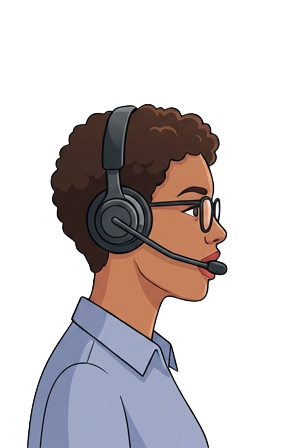 Too close
Mic too close or off-position · voice distorts
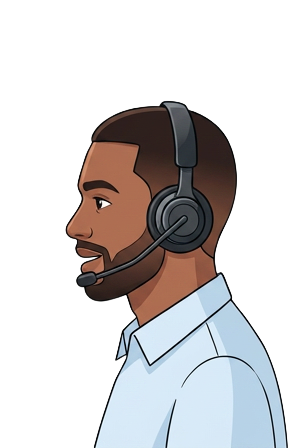 ~3 cm
~3 cmHeadset on · mic ~3 cm from the side of mouth
Problem · Some people speak quietly because they don't want to disturb other people during the test. The mic doesn't pick up the words clearly, so the engine can't score what you said.
Fix · If everything was OK during the microphone test, speak normally and imagine the other people aren't there. Use the same volume as your mic check.
Clicking Next while recording → answer cut off
Wait for ‘Completed’, then click Next
Problem · Clicking Next while the recorder is still running cuts off your answer. There's no way back — you can't return to a Repeat Sentence task.
Fix · Wait until the status shows 'Completed'. Only then click Next, and only when you're sure you're finished.
Tap play to watch — common pitfalls students make and how to avoid them.
Practise the highest-frequency Repeat Sentence questions reported from recent exams. Each item runs the full Pearson timing — listen, then 15 seconds to record. Transcripts are hidden by default — click Show transcript only after attempting the answer.
You will hear a sentence. Please repeat the sentence exactly as you hear it. You will hear the sentence only once.
Audio Status
Audio Recorder
Recording in 4
I missed yesterday's lecture. Can I borrow your notes?Show transcript
You will hear a sentence. Please repeat the sentence exactly as you hear it. You will hear the sentence only once.
Audio Status
Audio Recorder
Recording in 4
Meeting with mentors could be arranged for students who need additional help.Show transcript
You will hear a sentence. Please repeat the sentence exactly as you hear it. You will hear the sentence only once.
Audio Status
Audio Recorder
Recording in 4
Physiology is the study of the internal and external structure of the body.Show transcript
You will hear a sentence. Please repeat the sentence exactly as you hear it. You will hear the sentence only once.
Audio Status
Audio Recorder
Recording in 4
Students can get access to computers on a daily basis.Show transcript
You will hear a sentence. Please repeat the sentence exactly as you hear it. You will hear the sentence only once.
Audio Status
Audio Recorder
Recording in 4
The first few sentences of an essay should capture the reader's attention.Show transcript
You will hear a sentence. Please repeat the sentence exactly as you hear it. You will hear the sentence only once.
Audio Status
Audio Recorder
Recording in 4
The real reason for global hunger is not the lack of food, but poverty.Show transcript
You will hear a sentence. Please repeat the sentence exactly as you hear it. You will hear the sentence only once.
Audio Status
Audio Recorder
Recording in 4
There is no entrance fee for tonight's lecture.Show transcript
You will hear a sentence. Please repeat the sentence exactly as you hear it. You will hear the sentence only once.
Audio Status
Audio Recorder
Recording in 4
You should raise your concern with the head of school.Show transcript
You will hear a sentence. Please repeat the sentence exactly as you hear it. You will hear the sentence only once.
Audio Status
Audio Recorder
Recording in 4
I can't attend the lecture because I have a doctor's appointment.Show transcript
You will hear a sentence. Please repeat the sentence exactly as you hear it. You will hear the sentence only once.
Audio Status
Audio Recorder
Recording in 4
The lecture tomorrow will discuss the education policies in the United States.Show transcript
You will hear a sentence. Please repeat the sentence exactly as you hear it. You will hear the sentence only once.
Audio Status
Audio Recorder
Recording in 4
If you want to receive the reimbursement, you must submit the original receipts.Show transcript
You will hear a sentence. Please repeat the sentence exactly as you hear it. You will hear the sentence only once.
Audio Status
Audio Recorder
Recording in 4
The bookstore is located on the main campus behind the library.Show transcript
You will be scored on the correct word sequences you produce, so the more phrases you understand, the better your reproduction will be. For example, this sentence has three phrases, each carrying a separate message:
Phrases marked with /:
Next week's tutorial /on Tuesday /has been cancelled.
/ = a brief pause between meaningful phrases
Make a mental note of the way the speaker uses stress and intonation on the recording. These patterns help to convey the meaning. Speak calmly and clearly, copying the same stress and intonation.
Stressed words are underlined; falling intonation is marked ↓.
I'm going to attend the briefing for students
Underline = stressed word ↓ falling intonation
Your score on Repeat Sentence is based on three traits. Open each card to see what raises and lowers your score, with full band descriptors.
Content for speaking tasks is rated on whether you say the right things — the words from the prompt (Read Aloud, Repeat Sentence) or the right ideas with detail (Describe Image, Retell Lecture, Respond to a Situation). For Describe Image / Retell Lecture / SGD / RTAS, a human also reviews Content.
Coach tip · If you can’t see a number on the chart, describe the trend instead — never invent data.
Sentence prompt: 'Students are encouraged to take part in a range of activities.' Listen to the three sample answers — each is from a test taker at C1, B2 or B1 competence level.
Feedback
Feedback
Feedback
Learn how to get ready for the Repeat Sentence task by looking at strategies and practising listening for linking sounds and pausing.
Step 1 of 14
Tick (✅) the skills you feel will be useful for Repeat Sentence.
Step 2 of 14
It is important that you understand what is expected of you in the task. Complete the text about the instructions for the Repeat Sentence task. Use the words in the box.
1. On the screen, you will see the ¹___ at the top.
2. There are two ²___ boxes.
3. The audio status box will count down from three seconds. A recording will play ³___.
4. The status will change to playing. You can increase the ⁴___ if you want to.
5. When the recording finishes, the status will change to ⁵___.
6. After one second the ⁶___ will open and the status will change to ⁷___.
7. You have ⁸___ seconds to give your response.
Step 3 of 14
In this task you can take notes while you listen. Read two sets of notes (a and b). Which is more effective and why? Could you use either set to repeat the full sentence?
a
gd idea begin diss review lit
b
It's a good idea to ̶b̶e̶g̶a̶i̶n̶ begin your
1. Which set is more effective — a or b? Why?
2. Can you use notes a or b to repeat the full sentence?
Step 4 of 14
There are two parts to the task. Decide whether each action belongs under 'While listening to the sentence' or 'While repeating the sentence'.
Step 5 of 14
🎧 Model audio
In the Repeat sentence task, it can be difficult to recognise individual words because the speaker links words together to increase fluency.
Listen to and read the sentences and underline the words or sounds that the speaker links together. You can listen more than once.
Words link together if a word ends in a consonant and is followed by a word that starts with a vowel (a, e, i, o, u). So in the examples below, the underlined words and sounds are linked.
Step 6 of 14
🎧 Sentence 1
🎧 Sentence 3
Words link if a word ends in a consonant and is followed by a word that starts with a vowel (a, e, i, o, u). Click the linked words. Then read each sentence aloud, copying the speaker's linking.
Step 7 of 14
In the Repeat sentence task, the speaker will pause naturally as they read the sentence. Try to think like the speaker. Click between words to insert / where you think the speaker will pause. Then read the sentence aloud.
Ourcarbonfootprintisoneofseveralcausesofclimatechange.
Step 8 of 14
Listen and check your answers from the previous exercise. Tick the statements that are true for your prediction.
🎧 Model audio
Step 9 of 14
Record yourself as you repeat the sentence in the previous exercise. Try to copy the speaker's pauses. Listen again and compare your recording with the speaker.
Step 10 of 14
🎧 Model audio
Listen to four more sentences. Notice the pauses. Repeat the sentences, pausing where necessary. Record yourself. Compare your recording with the speaker.
Step 11 of 14
🎧 Model audio
Listen to the recording. Repeat the sentence and record yourself if you can.
Step 12 of 14
🎧 Model audio
Listen to three test takers repeat the sentence. What do you think of their performance? Make notes on each test taker's performance.
Step 13 of 14
How do the performances in the previous exercise compare with yours? Read the reports and check if you agree.
Step 14 of 14
Listen to and repeat the sentences. Record yourself. Then listen to your recording and tick the statements that are true for you.
🎧 Model audio
All audio is captured in your browser using the MediaRecorder API. Nothing is uploaded — refresh the page to clear it.