Introduction
Start by addressing the person directly, e.g. Hi, sorry to bother you, but…

Respond to a Situation (RTS) is a Speaking task where you listen to and read a short description of an everyday situation, then speak an appropriate response. On this page: an overview of the task, top strategies for planning your reply, sample answers and common mistakes to practise with your trainer, the most repeated 2026 situations, and a guided task worksheet.
Length of situation as text:
3–4 sentences
Preparation time:
10 seconds
Time to give your response:
40 seconds
Number of these tasks:
2–3
Respond to a Situation tests your ability to use functional language appropriate to the context and situation — apologising, thanking, requesting, persuading, etc.
Task
Respond to a Situation
Speaking
Overall
Your voice → analysed by AI + human expert → contributes 13% to Speaking and 6% to Overall.
Official PTE School walkthrough — how to answer Respond to a Situation.
The screen below is annotated with green markers (1–5). Each marker is explained on hover — they cover the timer, instructions, the situation audio, the audio recorder and the Next button.
Listen to and read a description of a situation. You will have 10 seconds to think about your answer. Then you will hear a beep. You will have 40 seconds to answer the question. Please answer as completely as you can.2Read the task instructions carefully.
You chose to study on a politics course but you have changed your mind. You think a history course might be better but you're not sure what the course includes. What do you say to your teacher to get some advice?
Audio Recorder
Recording in 10
Hover the green markers to see what each part of the screen does.
Skill assessed
Speaking
Score weight
up to13points
The AI scorer checks
Criterion
Using appropriate functional language, e.g. apologising, making a request, persuading, etc.
Purpose
Using appropriate register, e.g. formal or informal, depending on the situation.
Grammar
Using appropriate words, phrases and grammar.
Fluency
Speaking fluently at a natural speed with correct intonation.
Pronunciation
Using clear pronunciation.
Tone
Using an appropriate tone for the situation.
Practise organising your descriptions into a logical structure. A strong RTS answer has 5 clear stages.
Start by addressing the person directly, e.g. Hi, sorry to bother you, but…
Explain why you are talking. Use the context from the situation, e.g. I booked this room from two to three to work on a project with my classmates.
Add details NOT included in the situation to show effective communication, e.g. I saw on my way here that room 2 is free if you still need a room.
Finish with a call to action that the situation requires (request, advice, apology, etc.), e.g. Would you mind…?
Make sure your response is up to 40 seconds long — fill the time but don't slow down artificially.
Generate ideas. Work with a friend to brainstorm situations and contexts in which you could ask for information, apologise, make requests, ask for advice, etc. Try formal and informal contexts.
Record yourself. Set a 40-second timer and record your answer. Check structure, pronunciation, intonation, rhythm and fluency. Make sure all important information and additional details are included.
Practise changing generic terms into specific examples. The situation often uses generic terms like group project or summer job. In your response, use specific examples (e.g. presentation on 19th-century sculpture, lifeguard at a swimming pool) rather than repeating words from the description.
Practise functional language. Whenever you read or hear someone asking for information, apologising or making a suggestion, think of a different way to say the same thing.
You only pause briefly.
You don't pause for longer than three seconds.
You use your own words.
You don't simply repeat the words from the situation description.
You speak at a natural speed. It's fine to finish before the timer ends.
You don't slow down just to fill the time.
You ignore others in the room.
You don't let other people speaking distract you.
You use natural pronunciation.
You don't exaggerate your pronunciation or intonation. Speak as naturally as possible.
You use natural pace and intonation.
You don't speak too fast or too slow or exaggerate your intonation.
Practise with the strategies above. Real exam timing — the situation audio plays, then a 10-second prep, then a beep, then 40 seconds to record your response. Compare your answer with the model below.
Listen to and read a description of a situation. You will have 10 seconds to think about your answer. Then you will hear a beep. You will have 40 seconds to answer the question. Please answer as completely as you can.
You have applied for a summer job as a research assistant to your professor. You have not heard if your application was successful and need to check with your professor so that you can organise accommodation for the summer if necessary. You want to leave a phone message for your professor. What would you say?
Audio Recorder
Recording in 10
Model recording
Listen to a strong sample answer. Notice how the speaker addresses the professor directly, states their purpose, adds specific details and finishes with a clear call to action.
Want a coach to score your attempt? Send your recording on WhatsApp and we'll reply with personalised feedback.
Compare three responses to Respond to a Situation 1 at C1, B2 and B1 levels. Click any card to listen and read the examiner feedback.
Hi, excuse me. I've booked this room from 2 p.m. My friends are on their way – they'll be here soon – and we're going to need the room for our group project. We'll be out by 3 though, if you want to come back later. Sorry about that.
Feedback
Hi. Sorry to disturb you, but I've booked this room from 2 p.m. to 3 p.m. My classmates will be arriving shortly, so would it be possible for you to find another spot?
Feedback
Hello. I booked this meeting room from 2 p.m. to 3 p.m. to work on a group project. My classmates will arrive soon. Could you move to a different room, please? Thank you.
Feedback
Private to you — tick each item you actually did. Saved on this device only.
Practise the highest-frequency Respond to a Situation questions reported from recent exams. Each item runs the full Pearson timing — situation audio plays → 10-second prep → beep → 40 seconds to record. Read the situation prompt under each simulator before you begin.
Listen to and read a description of a situation. You will have 10 seconds to think about your answer. Then you will hear a beep. You will have 40 seconds to answer the question. Please answer as completely as you can.
Earlier today, your housemate offered you a portion of food she had cooked to take for lunch because you had a full day of university classes. You now want to express your gratitude for her generosity. It's also made you want to learn about cookery from your housemate. What would you say to her?
Audio Recorder
Recording in 10
Listen to and read a description of a situation. You will have 10 seconds to think about your answer. Then you will hear a beep. You will have 40 seconds to answer the question. Please answer as completely as you can.
You have been going to exercise classes at the gym on campus. You think your friend would find them genuinely enjoyable, motivating and beneficial but you suspect they won't be keen on the idea. You've decided to try and persuade them to join you in the next session. What would you say to persuade them?
Audio Recorder
Recording in 10
Listen to and read a description of a situation. You will have 10 seconds to think about your answer. Then you will hear a beep. You will have 40 seconds to answer the question. Please answer as completely as you can.
An older student has been a mentor to you over the last two years. During this time, your mentor has given you helpful guidance with your studies and personal development. You decide to thank your mentor and explain the positive impact their help and advice has had on you. What do you say?
Audio Recorder
Recording in 10
Listen to and read a description of a situation. You will have 10 seconds to think about your answer. Then you will hear a beep. You will have 40 seconds to answer the question. Please answer as completely as you can.
Your university has promised you a single room in student accommodation on campus for this year. However, when you arrive at the room you've been assigned, you realise that it is a shared room. You decide to talk to the accommodation officer to explain what's happened and politely insist on having a single room instead. What do you say?
Audio Recorder
Recording in 10
These pitfalls hurt Content and Fluency scores most often.
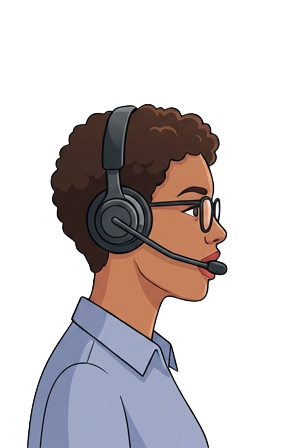 Too close
Mic too close or off-position · voice distorts
 ~3 cm
~3 cmHeadset on · mic ~3 cm from the side of mouth
Problem · Many students simply re-use the wording of the prompt. The engine penalises unoriginal responses and your Content score drops sharply.
Fix · Paraphrase. Use synonyms and add specific, made-up details (a name, a room number, a time) so the response sounds natural.
Clicking Next while recording → answer cut off
Wait for ‘Completed’, then click Next
Problem · Talking to a friend like a professor — or to a professor like a friend — loses Content marks because the functional language doesn't fit the audience.
Fix · Identify the audience first. Friend / housemate → informal. Lecturer / accommodation officer → polite, formal. Match greeting, vocabulary and closing.
For this question type you need to listen to and read a prompt describing an everyday situation. You then need to provide a spoken response describing what you would say in the situation.
You will have 10 seconds to think about your response, and then 40 seconds to speak.
The audio recording will play automatically. After the audio finishes you will have 10 seconds to prepare. The recording status box displays a countdown until the microphone opens. You will hear a short tone — start speaking immediately.
👉 You should speak clearly. There is no need to rush.
👉 Finish speaking before the progress bar reaches the end. The word "Recording" changes to "Completed".
👉 You can only listen to the audio recording once.
👉 You can only record your response once.
Note: While the audio is playing you can take notes on the erasable whiteboard provided.
You have 10 seconds to prepare — examine the prompt to decide what main points you need to convey, and whether to use a formal or informal register. You only have 40 seconds to speak, so make sure you cover everything required by the prompt within the time. Try to speak for the whole 40 seconds if you can. If you repeat ideas, correct yourself or hesitate, you will use up valuable time and lose score points. Keep talking and ignore any mistakes.
Your Respond to a Situation score is based on Content, Pronunciation and Oral Fluency. Open the cards below for full band descriptors.
Content for speaking tasks is rated on whether you say the right things — the words from the prompt (Read Aloud, Repeat Sentence) or the right ideas with detail (Describe Image, Retell Lecture, Respond to a Situation). For Describe Image / Retell Lecture / SGD / RTAS, a human also reviews Content.
Coach tip · If you can’t see a number on the chart, describe the trend instead — never invent data.
Step-by-step practice mirroring the official Pearson worksheet. Each step has a discreet "Answer" link at the bottom — click only after attempting the exercise.
Step 1 of 13
It is important that you know what to expect when you look at this task in the test. Number items a–d from 1 to 4 in the order they appear on the screen, starting at the top.
1. a — the audio status box ___
2. b — the instructions ___
3. c — the recording status box ___
4. d — the description of the situation ___
Step 2 of 13
Are these sentences true (T) or false (F)? Correct any false sentences.
1. 1. The audio status box counts down from 40 seconds to zero, and then the recording starts to play. ___
2. 2. You will be able to read and listen to the description of the situation at the same time. ___
3. 3. You will have 20 seconds to prepare before you have to start talking. ___
4. 4. After the beep, the recording status box changes to 'Recording' and you begin speaking when the bar begins moving. ___
5. 5. When the bar reaches the end, the microphone switches off and the recording status box changes to 'Completed'. ___
Step 3 of 13
What type of situations are you likely to be presented with in this task? Tick (✓) the correct options.
Step 4 of 13
Read situations 1–6 and match each one with the correct response (a–f).
Options
Step 5 of 13
Which tone should you use when you speak to the following people, formal (F) or informal (I)?
1. 1. your older brother or sister ___
2. 2. a new professor on your course ___
3. 3. a young child who lives next door ___
4. 4. the president of your university ___
5. 5. a tourist (adult) who needs directions ___
6. 6. some teenagers from your old school ___
Step 6 of 13
Look at situations 1–6 in Exercise 4.1 again. Does each situation require a formal (F) or an informal (I) tone?
1. 1 ___
2. 2 ___
3. 3 ___
4. 4 ___
5. 5 ___
6. 6 ___
Step 7 of 13
Match quotes 1–6 with the correct call to action (a–f).
Options
Step 8 of 13
Examiners prefer it when you try to use your own words rather than repeating language from the prompt. Fill in the missing letters to complete these synonyms.
1. 1. need (verb): r _ q _ _ _ _
2. 2. issue (noun): p _ _ _ l _ _
3. 3. hard (adjective): d _ f _ i _ _ _ _
4. 4. nearly (adverb): a _ _ _ _ t
5. 5. rare (adjective): u n _ _ _ _
6. 6. often (adverb): f _ _ q _ _ _ _ _ y
7. 7. talk (verb): s _ _ _ k
8. 8. job (noun): o _ _ _ _ a _ _ _ n
Step 9 of 13
Look at excerpts 1–6, taken from descriptions of various situations. Then choose the option (a or b) that is the more accurate or appropriate paraphrased response.
1. 1. You did not receive a reply from the department office to a query about your grade.<br/> a) I haven't heard anything back as yet, and I wondered if …<br/> b) I never got a reply from you, so, what's happening?
2. 2. You need to know what time your friend can meet you to hang out.<br/> a) May I enquire as to when you might be available in order to …<br/> b) Hey, can you let me know when you'll be free to get together and …
3. 3. You hope to participate in a new learning programme at your university.<br/> a) I want to participate in the new plan for learning or whatever …<br/> b) I would really like to take part in the academic scheme that …
4. 4. You are unable to attend a medical appointment.<br/> a) Can't make it over to the hospital cos I'm super busy that day, so …<br/> b) Unfortunately, I am unavailable on the proposed date; however, I could …
5. 5. You want to apologise to your basketball teammates for being late.<br/> a) Guys, I'm so sorry I didn't get here on time but I …<br/> b) I wish to extend sincere apologies for my lateness today …
6. 6. You need to ask the science lab supervisor how to use some important equipment.<br/> a) Would you mind showing me the correct way to set up the …<br/> b) Um, I really haven't a clue how this thing works. I give up!
Step 10 of 13
Read the situation, then read the test taker's response below and choose the correct option to assess it.<br/><br/><strong>Situation:</strong> You have applied for a summer job as a research assistant to your professor. You have not heard if your application was successful and need to check with your professor so you can organise accommodation for the summer if necessary. You want to leave a phone message for your professor.<br/><br/><em>"Hi there. My name's John and I'm phoning about the summer job. I haven't heard if my application was successful, so I need to check with you, you know, so I can organise accommodation for the summer if necessary. It'd be good if I actually knew what was happening with this. Thanks, bye!"</em>
1. 1. The test taker uses / doesn't use an appropriate tone to address his professor.
2. 2. The test taker paraphrases / doesn't paraphrase many words and phrases from the original description.
3. 3. The test taker has definitely / may not have understood the call to action.
4. 4. Overall, the test taker does / doesn't do a good job of responding to the situation.
Step 11 of 13
Use your phone or other electronic device to record your own response to the situation in 7.1. Make sure you speak for up to 40 seconds.
Step 12 of 13
🎧 Model audio
Listen to test taker Karl Ford responding to the situation in 7.1. Tick (✓) the things he does to produce a good response. Are there any things he shouldn't have done (S), or forgot to do (F)?
Step 13 of 13