
What you'll see
Get familiar with the task.
This is a long-answer question that mixes listening and speaking. You'll hear a short lecture (with an image), then in 10 seconds you must retell the key ideas in your own words. You have 40 seconds to speak.
You will hear a lecture. After listening, in 10 seconds, retell what you have just heard from the lecture in your own words. You will have 40 seconds to give your response.

You will hear a lecture. After listening, in 10 seconds, retell what you have just heard in your own words. You will have 40 seconds to give your response.
Lecture audio
Plays automatically when you start
Audio Recorder
Recording in 10
3 strategies that work
The mindset before the click.
- 1Strategy 1
Take effective notes — content words only
Catch main points, supporting details, examples, dates and numbers. Don't worry about spelling.
- 2Strategy 2
Use the 10s prep to plan, not rewrite
Quickly scan your notes, pick the key ideas, and choose connectives (first, however, as a result).
- 3Strategy 3
Think in English — don't translate
Translating from your first language causes slow, hesitant speech. Speak directly in English.
Try each strategy
Guided practice you can do alone or with a partner.
1Take effective notes — content words only
You only hear the lecture once. Skip function words (the, of, was) and write the words that carry meaning.
- Capture: main points and principles, supporting details/examples, important dates and numbers.
- Mark relationships between ideas — supports (+), contrasts (BUT), cause→effect (→).
- If the lecture has an image (graph, map, picture), use its labels as headings for your notes.
- Example for Q1 (Florida Keys interview): 'Topic: fish Florida Keys · 50 yrs change · consume 90% big fish · belief humans can't change ocean · BUT destructive: take out + put in · health = trouble · grade C-'.
2Use the 10s prep to plan, not rewrite
Ten seconds is short. Don't write more — just review and connect.
- Read your notes top-to-bottom once. Underline the 3–4 most important points.
- Pick connectives: 'The speaker talks about…', 'First…', 'However…', 'As a result…', 'In conclusion…'.
- Think of your opening sentence. Starting strongly stops you from freezing.
3Think in English — don't translate
Translating in your head causes slow, laboured speech and unnatural rhythm.
- Practise giving 1-minute talks where you only think in English from notes to mouth.
- Use simple sentence patterns you already control — they sound more natural than over-complex ones.
- If you forget a word, paraphrase (say the same idea in simpler words) and keep moving.
- Compare the B1, B2 and C1 samples below to hear the difference between translated and English-thinking speech.
Listen to the full interview. Take notes on the main points, then practise retelling in 40 seconds. Compare with the B1/B2/C1 samples below.
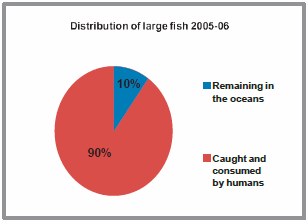
Listen to the full interview. Take notes on the main points, then practise retelling in 40 seconds. Compare with the B1/B2/C1 samples below.
Lecture audio
Do it under time
Simulate the real test.
Press Start. The lecture plays once, then you have 10 seconds to prepare and 40 seconds to record your response.
You will hear a lecture. After listening, in 10 seconds, retell what you have just heard in your own words. You will have 40 seconds to give your response.
Lecture audio
Plays automatically when you start
Audio Recorder
Recording in 10
Compare & learn
Listen to sample answers and rank them.
Listen to all three responses. Try ranking them from weakest → strongest before reading the notes below each one.
Includes a few points but misses key information and misinterprets some details. Several hesitations, false starts and long pauses hurt fluency. Some consonant/vowel errors but understanding is preserved. Limited control of simple grammar. ~39 seconds.
Includes some main points and a conclusion but omits other key information. Staccato speech with many hesitations and false starts. Minor pronunciation errors. Grammar and vocabulary errors present; repetitive word choice. ~36 seconds.
Accurately discusses the topic with several supporting points. A few reformulations and hesitations but speech is continuous. Standard pronunciation. Varied, context-appropriate vocabulary. ~32 seconds.
Tick each box only when you can do it without looking back. This unlocks your next chapter.